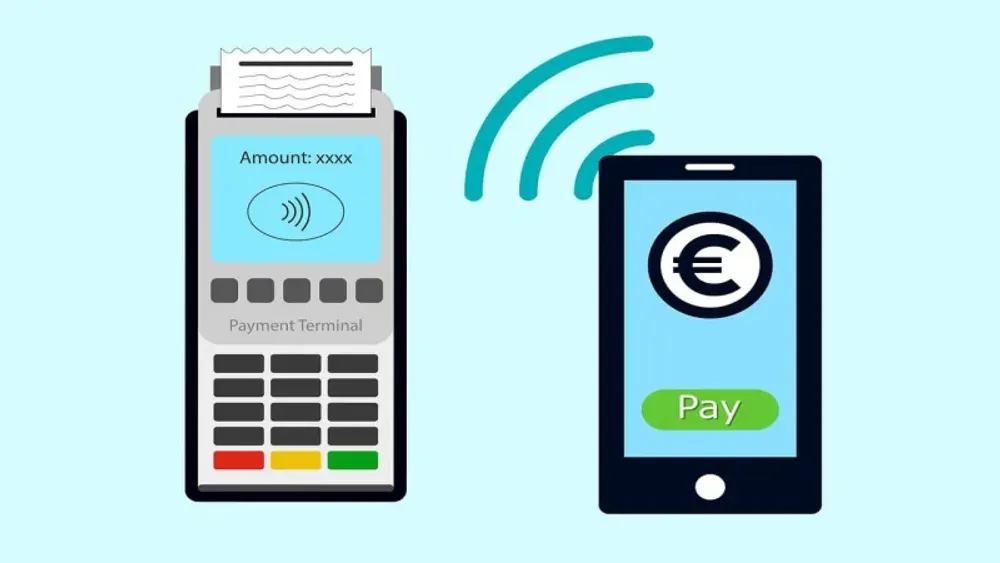
NFC (Near-Field Communication) is a short-range wireless technology that allows data exchange between devices at close range (up to 4 centimeters). The technology works on the principle of electromagnetic induction, where one device emits a magnetic field and another picks it up. It's most commonly used for contactless payments, exchanging information, or automating certain actions. NFC is an advanced version of RFID (radio-frequency identification), but the difference is that with NFC the communication is two-way – both devices can send and receive data. The technology is favored for its fast connection, convenience, and high level of security. Main applications of NFC 1. Digital wallets and mobile payments One of the most popular applications of NFC is using a smartphone as a digital wallet. With NFC you can pay quickly and easily at POS terminals just by holding your phone near the terminal. Popular platforms such as Google Pay, Apple Pay, and Samsung Pay use NFC for contactless payments, offering a high level of security through data encryption. 2. Smart transport and urban infrastructure NFC is being integrated more and more successfully into urban transport systems worldwide. The technology lets users buy tickets or pay for parking simply by tapping their smartphone against the reader. In some cities, such as London, you can use NFC to pay for transport services or even to rent bikes and scooters. 3. Content exchange Besides payments, NFC can also be used to exchange information. Android Beam, a feature built into Android devices, allows quick transfer of photos, videos, or files between devices via NFC. Although the technology isn't widely used for this today, it offers convenience, especially when you need to transfer data without an internet connection. 4. NFC tags for automation One of the more innovative applications of NFC is programmable tags. They can be placed in different locations – at home, in the office, or in the car – to trigger preset actions. For example, an NFC tag on your desk could automatically switch your phone to "do not disturb" mode, or turn on Wi-Fi when you get home. Security in NFC payments Security is a top priority in NFC technology, especially when it comes to financial transactions. NFC's short range is its main advantage, since the device has to be right next to the reader for communication to happen. On top of that, mobile wallets use tokenization – a process in which the actual credit card information is never transmitted. Instead, a unique code (token) is generated for each transaction, which makes the data practically impossible to intercept. The future of NFC technology NFC technology keeps evolving, and it's expected to become part of many more industries and applications in the future: 1. Healthcare NFC could play a key role in healthcare by making it easier to track medical records and improving the interaction between medical devices and patients. For example, NFC could be used for contactless patient identification, helping to avoid treatment errors. 2. IoT and smart homes NFC will become increasingly integrated into smart homes and the IoT (Internet of Things). With NFC, users will be able to automate actions such as locking and unlocking doors or controlling lighting and appliances just by tapping their phone against the relevant NFC chip. 3. Smart cities The cities of the future will use NFC for more efficient management of urban infrastructure. For example, traffic management systems could use NFC to automatically recognize vehicles passing through certain road sections, or for contactless toll and parking payments. 4. Modern consumer devices In the future we'll see even more products equipped with NFC that will make everyday life easier. Examples include accessories such as smartwatches and even jewelry with NFC, which will be able to store and protect personal data. Companies like Sony are already experimenting with NFC in their camera accessories, making it even easier to shoot and transfer images. NFC is gaining momentum Practical tips for using NFC Turn on NFC on your device : most modern smartphones have built-in NFC functionality that can easily be enabled from the settings menu. Use secure mobile wallets : for contactless payments, always choose proven apps such as Google Pay or Apple Pay for maximum protection. Automate tasks with NFC tags : with a bit of creativity and a few NFC tags, you can create handy shortcuts for your phone – such as turning on Wi-Fi or starting music in the car. NFC technology is just getting started NFC technology offers a wide range of applications and has the potential to change the way we interact with the technology around us. From contactless payments to automating everyday tasks, NFC will keep evolving and finding new uses. As mobile devices and the Internet of Things keep growing in popularity, NFC will play a key role in the future of the digital world. With the right innovations and ongoing improvements, NFC will remain at the core of digital transformation across industries.
What Is NFC and How Does It Work?
Leave a comment
Your email address will never be published or shared. Required fields are marked *